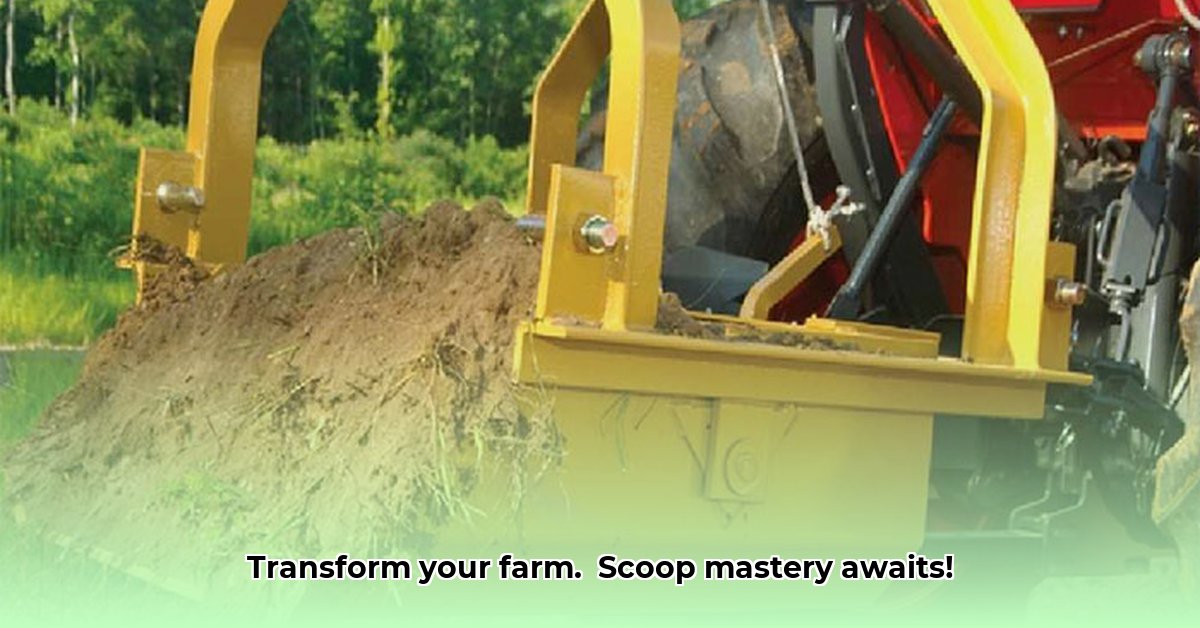
Choosing the Right Pond Scoop for Your Tractor
Selecting the right pond scoop is crucial for efficient and safe operation. Consider these key factors: your tractor's horsepower and lift capacity (ensure the scoop's weight doesn't exceed your tractor's limits), the type of work you'll be doing (larger scoops for large areas, smaller scoops for tight spaces), and your budget (new scoops offer warranties but used scoops can be cost-effective). Always check for compatibility with your tractor's three-point hitch system – a snug fit is essential for safety and performance. Don't forget to examine features, such as reinforced edges for added durability. Prioritizing these aspects ensures you select the optimal tool for your farm's specific needs. Is your current tractor compatible with a larger scoop for increased productivity? For more information on tractor attachments, check out this helpful resource: Tractor Attachments Guide.
Safety Precautions: Prioritizing Safe Operation
Safety is paramount when operating heavy machinery. Before starting, always engage the tractor's parking brake. Utilize stabilizer bars for enhanced stability, particularly when working on uneven ground or reversing. Never overload the scoop; exceeding its capacity can lead to serious damage and potential injury. Regularly inspect the hitch and all connections for tightness and security; loose components can cause accidents or damage. Always maintain awareness of your surroundings, watch for obstacles, and avoid distractions. Wear appropriate safety gear, including sturdy boots, gloves, and safety glasses. Remember, taking a break when tired is essential for safe operation. Have you considered implementing additional safety measures, maybe even a spotter, to further reduce risk levels?
Step-by-Step Guide to Common Tasks
Let's explore common pond scoop applications:
Moving Dirt: Securely attach the scoop. Position it over the dirt pile. Lower it gently to avoid scattering. Scoop the dirt, lift carefully, and transport to the desired location. Repeat as needed. A smoother approach leads to less spillage and greater efficiency.
Creating Swales: Use small, controlled scoops to create shallow, graded ditches—this is where precise movements matter. Think small, incremental scoops for better water management.
Clearing Debris: Pond scoops excel at gathering branches, rocks, and other debris. Use overlapping scoops to ensure thorough field clearing. Collect and dispose of the debris effectively. This will save you considerable time and effort compared to manual methods.
Leveling Ground: Overlapping scoops will even out the soil. Finish using the smooth edge for a level surface. Careful and consistent scooping is key to achieving an even result.
Maintenance and Troubleshooting: Extending Scoop Lifespan
Regular maintenance is key to maximizing your pond scoop's lifespan. After each use, thoroughly inspect it for damage or wear. Check the hitch, lubricate moving parts, and promptly address any issues. Store the scoop in a dry place to prevent rust. Proper maintenance prevents small problems from becoming costly repairs. What's your current maintenance schedule, and could it benefit from increased frequency or attention to detail?
Pond Scoop vs. Other Equipment: A Cost-Effective Analysis
While front-end loaders offer greater versatility, pond scoops provide a more cost-effective solution for many tasks. Their specialized design makes them efficient for smaller-scale operations and specific jobs like swale creation. Consider the relative cost of a pond scoop vs. a front-end loader in relation to your farm's size and operational needs. Would the increased versatility of a front-end loader justify its considerably higher cost in your specific use case?
Conclusion: Harnessing the Pond Scoop's Potential
Mastering pond scoop techniques enhances farm efficiency and contributes to sustainable practices. From moving dirt to creating swales, its versatility saves time, reduces costs, and boosts environmental responsibility. By following these guidelines and prioritizing safety, you can unlock the pond scoop's full potential for years of reliable service. What additional tasks could you efficiently tackle with a pond scoop that you are currently handling in a less effective way?